“We receive around 300 leads every month, but our sales team currently qualifies them manually. We want to automate lead qualification and routing…”
- Service
ai-marketing-automation25 - Interest
yes15 - Budget
3k-5k20 - AI intent25
A 15-step workflow that scores every inbound enquiry out of 100, with rules plus AI, and tells sales which leads to call first. Then we tested it until it broke, and fixed what we found.
“We receive around 300 leads every month, but our sales team currently qualifies them manually…”
A real internal test run. Contact details are hidden.
AI lead scoring, sometimes called AI lead qualification, uses a language model to read the unstructured parts of an enquiry, such as the problem a prospect describes in their own words, and turn them into a consistent, comparable score.
In this workflow AI does one bounded job: it scores the intent behind the written message, worth up to 35 of 100 points. Everything a form can capture as a fixed answer is scored by rules. That split keeps the result predictable, cheap to run and easy to explain to a sales team.
A single website enquiry already tells you a lot: what the prospect wants, whether they are ready to automate, what they can spend, and how clearly they understand their own problem.
The trouble is that half of those signals sit in dropdowns and half sit in a free-text box. Someone has to read each enquiry, weigh it against the others and decide where it ranks. Different people weigh the same enquiry differently, and a strong lead can wait in the queue behind weaker ones.
Which leads deserve attention first, and why?
Dropdown answers can be scored with rules. Free-text signals need interpretation.
We split qualification along the line between structured and unstructured data. Rules handle what has a known answer. AI handles what needs reading.
Lookup tables in Formatter by Zapier convert each dropdown answer into points.
AI by Zapier reads the prospect’s written problem and scores it against a fixed five-part rubric.
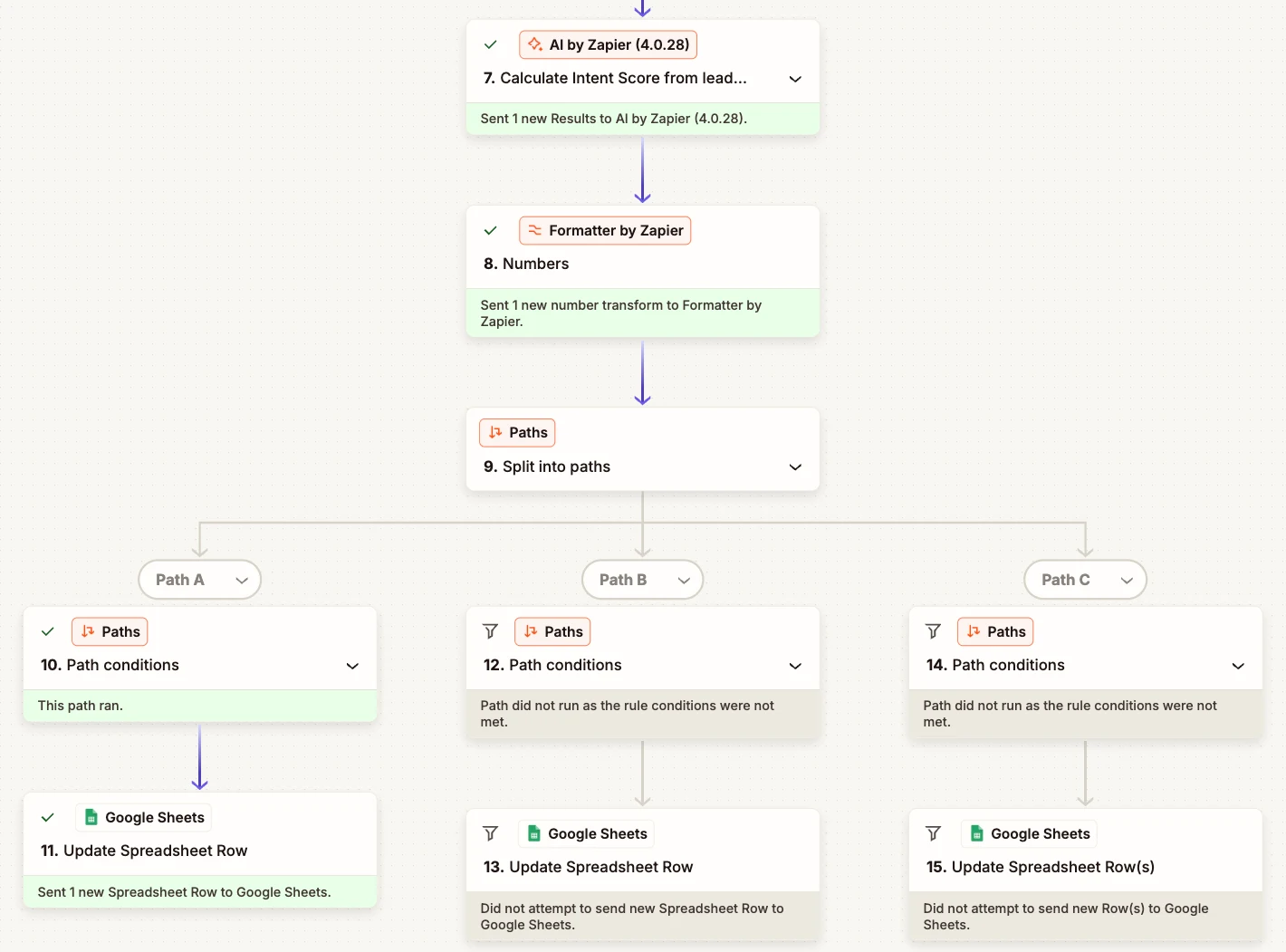
Seven stages, fifteen Zapier steps. Nobody touches the lead between the form submission and the prioritised record.
A prospect submits the website form.
Step 1 · NetlifyThe lead is written to the lead database.
Step 2 · Google SheetsService, interest and budget are scored by lookup.
Steps 3–6 · FormatterAI scores the written problem out of 35.
Step 7 · AI by ZapierAll four scores are summed to /100.
Step 8 · FormatterThe score picks the HOT, WARM or COLD path.
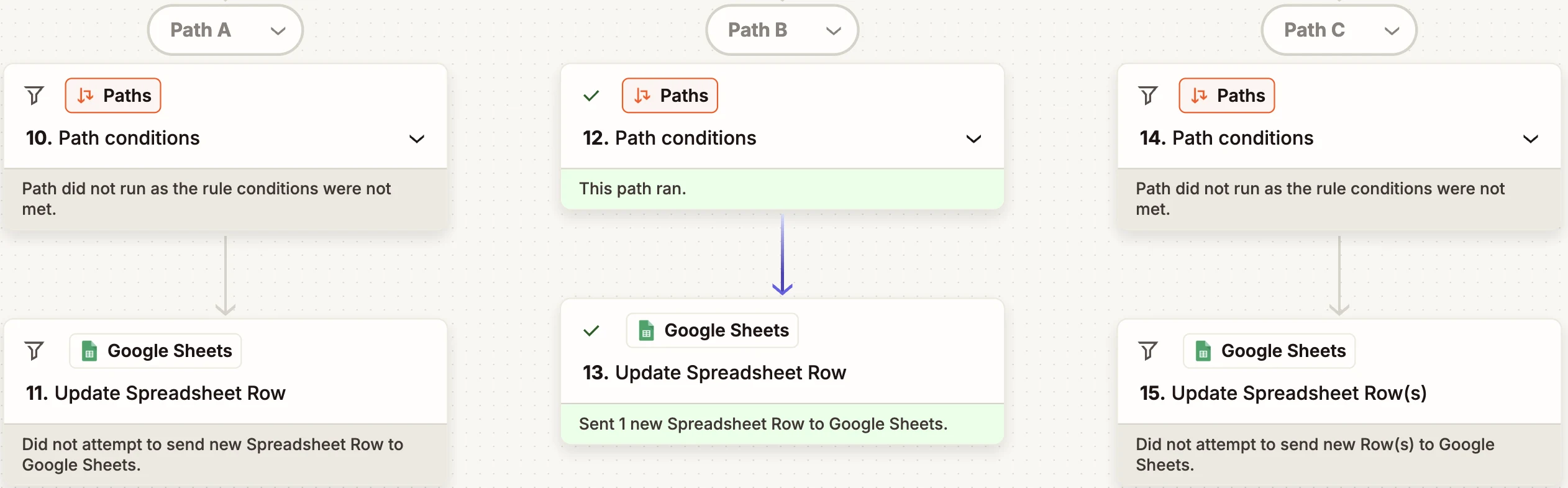
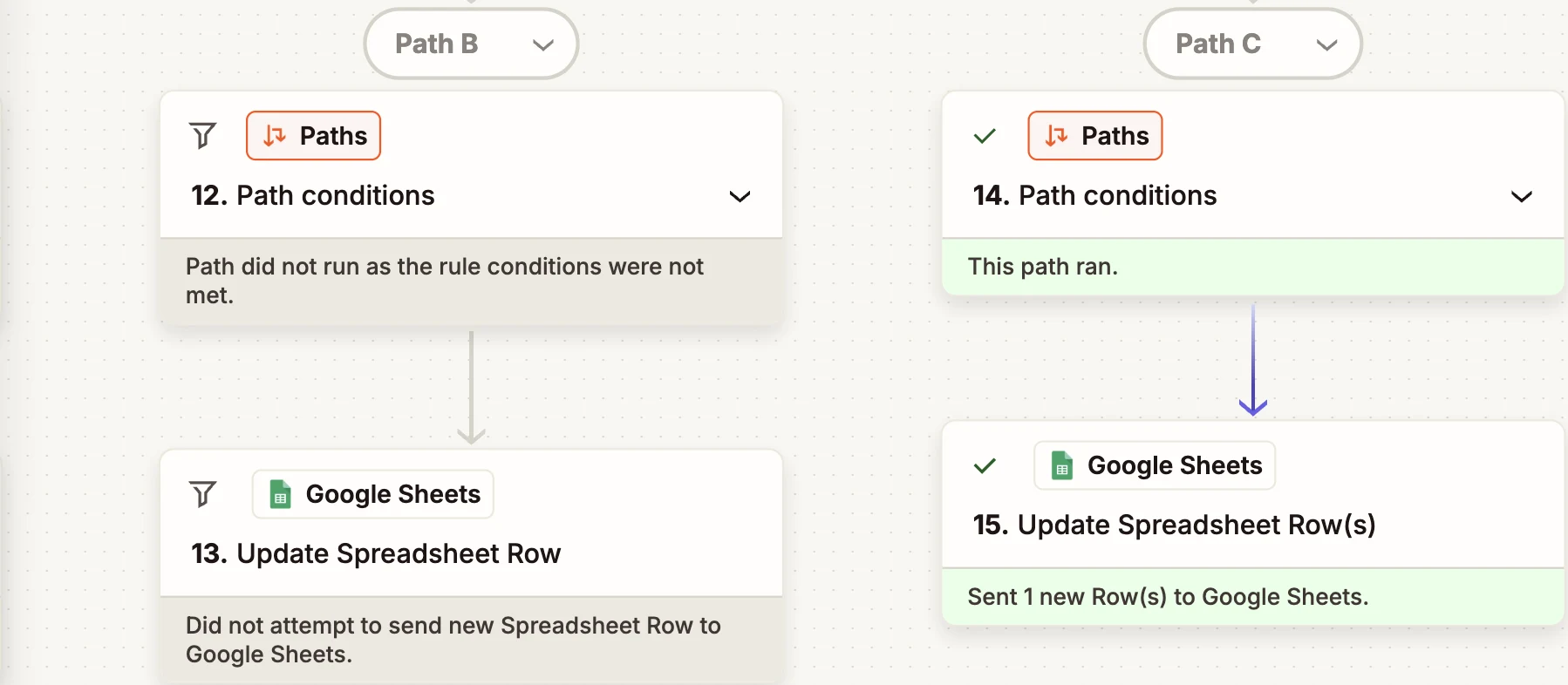
Steps 9, 10, 12, 14 · PathsScore and priority are written back to the record.
Steps 11, 13, 15 · Sheets

Scores of 80 and above route HOT, 50 to 79 WARM and below 50 COLD. Those thresholds are fixed rules, not AI judgement. Four signals feed the score, each with a fixed ceiling. AI intent carries the most weight because the written problem says the most about fit, but it can never outvote the structured signals on its own.
| Signal | Scored by | Max | Weight |
|---|---|---|---|
| Service relevance | Lookup table | 25 | |
| Automation interest | Lookup table | 15 | |
| Budget | Lookup table | 25 | |
| AI intent | AI by Zapier | 35 | |
| Total | 100 |
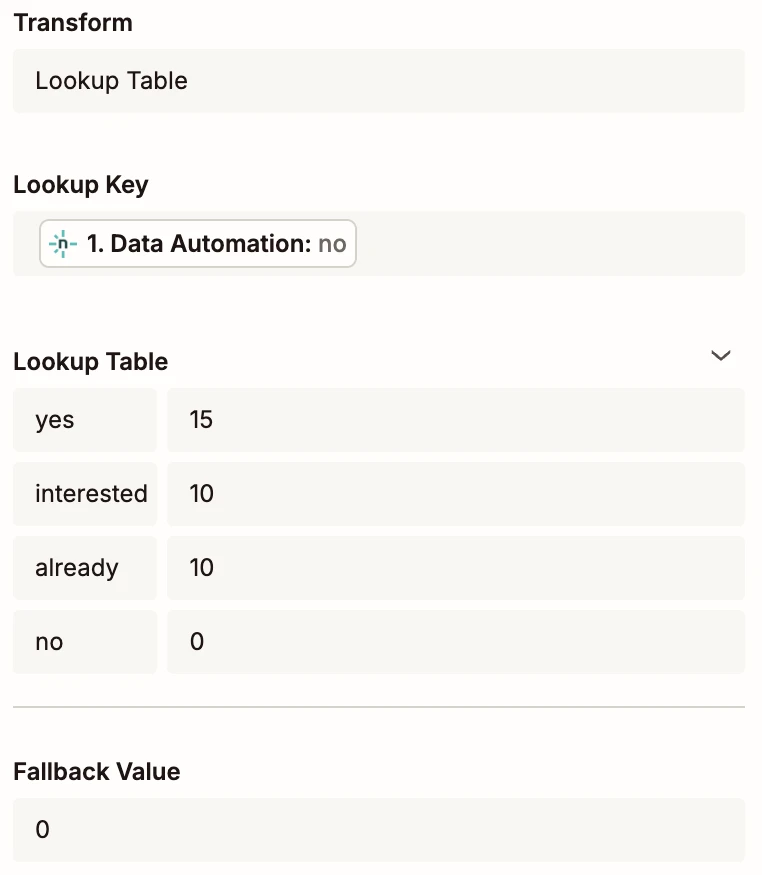
Each lookup key is the exact value the form sends to Zapier, not the label a visitor reads. Getting this wrong was the biggest issue found in testing (see below).
| Submitted value | Points |
|---|---|
yes | 15 |
interested | 10 |
already | 10 |
no | 0 |

A dropdown can tell you a budget. It can’t tell you whether the prospect understands their problem or how soon they need it solved. That is what the AI step reads for.
“We receive around 300 leads every month, but our sales team currently qualifies them manually. We want to automate lead qualification and routing because the current process takes too much manual effort.”
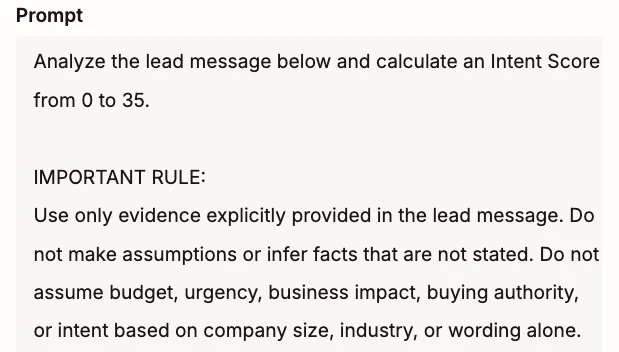
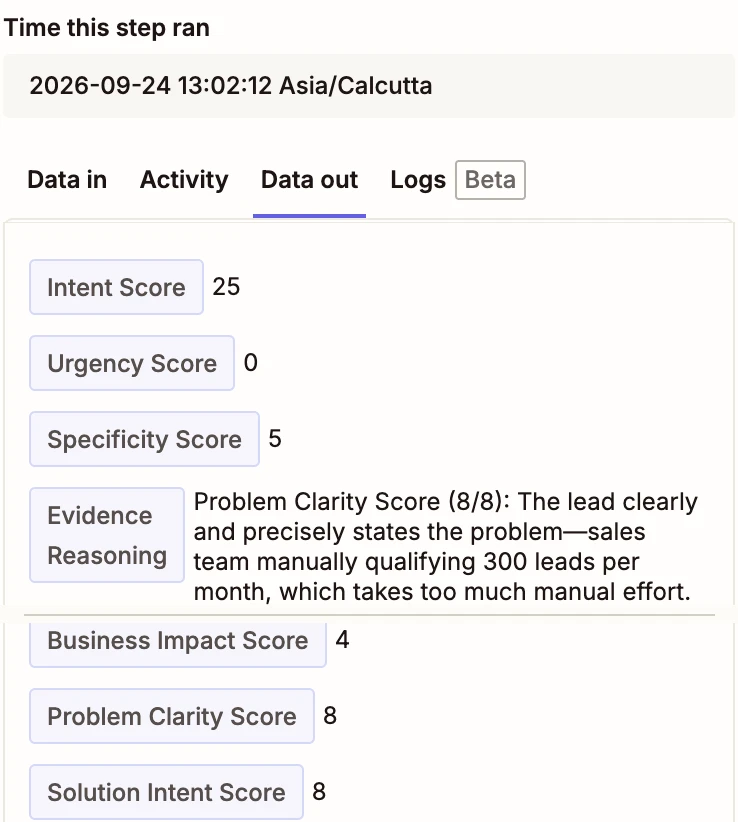
The prompt instructs the model to score only what the message states. It must not assume budget, authority, urgency or business impact the prospect didn’t mention. That is why urgency scored zero here: the message gives no timeline or deadline, so the model gave no points for it.

States the problem precisely: 300 leads a month, qualified by hand.
Describes the workload, but not what it costs in money or lost deals.
Explicitly wants to automate qualification and routing.
No timeline, deadline or reason to act now.
Gives scale, current process and desired outcome.
A run that completes proves nothing about the decision it made. So we submitted three enquiries built to land in different tiers and checked the score, the path that ran and the record written back.
“We receive around 300 leads every month, but our sales team currently qualifies them manually. We want to automate lead qualification and routing…”
ai-marketing-automation25yes153k-5k20“We get around 100 leads per month and our team currently qualifies them manually. We’re interested in automation but we’re still exploring how to get started.”
ai-marketing-automation25interested101k-3k15“We’re currently focused on improving our existing email campaigns. We’re not looking to automate our marketing processes right now.”
email-marketing10no0under-1k5Messages and field values exactly as submitted by test enquiries. Contact details are hidden.


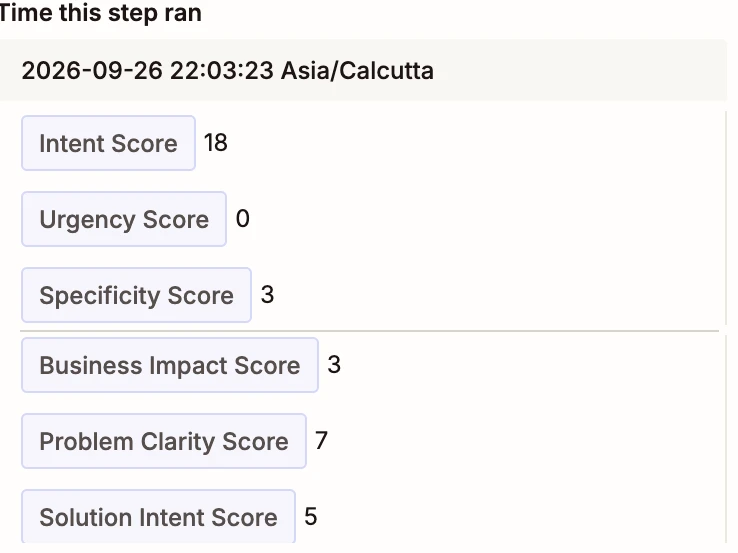
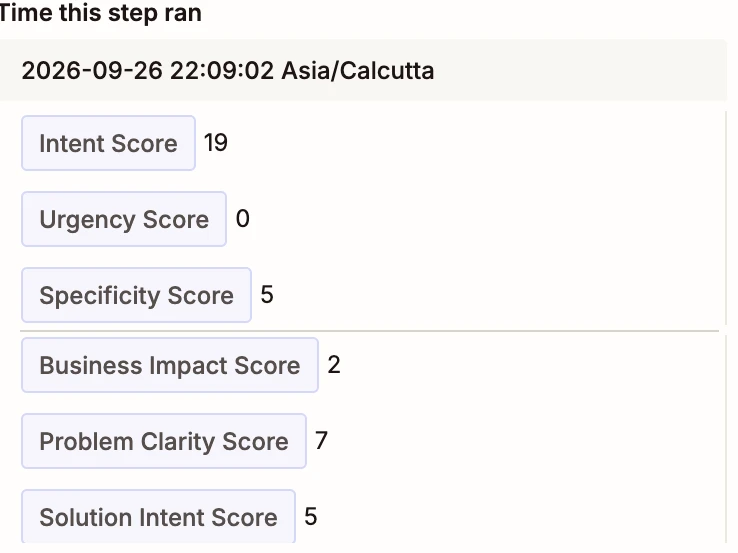
AI output isn’t guaranteed to be identical from one run to the next, so we submitted the WARM enquiry a second time to see how much the intent score would move, and whether it would change the decision.
| AI factor | Run 1 | Run 2 |
|---|---|---|
| Problem clarity (of 8) | 7 | 7 |
| Business impact (of 7) | 3 | 2 |
| Solution intent (of 8) | 5 | 5 |
| Urgency (of 6) | 0 | 0 |
| Specificity (of 6) | 3 | 5 |
| AI intent (of 35) | 18 | 19 |
| Rule-based points | 50 | 50 |
| Final score | 68 WARM | 69 WARM |
Three factors held steady. Business impact dropped a point and specificity rose two, a net change of one point. The rule-based 50 didn’t move, and both runs routed to WARM.
The thresholds absorbed the variation here because 68 sits well inside the WARM band. A lead scoring 79 on one run and 80 on the next would flip to HOT. That is why human review for leads near a threshold is on the roadmap.


✓ Actual AI by Zapier output from both runs. Each combines two scroll positions of the same panel.
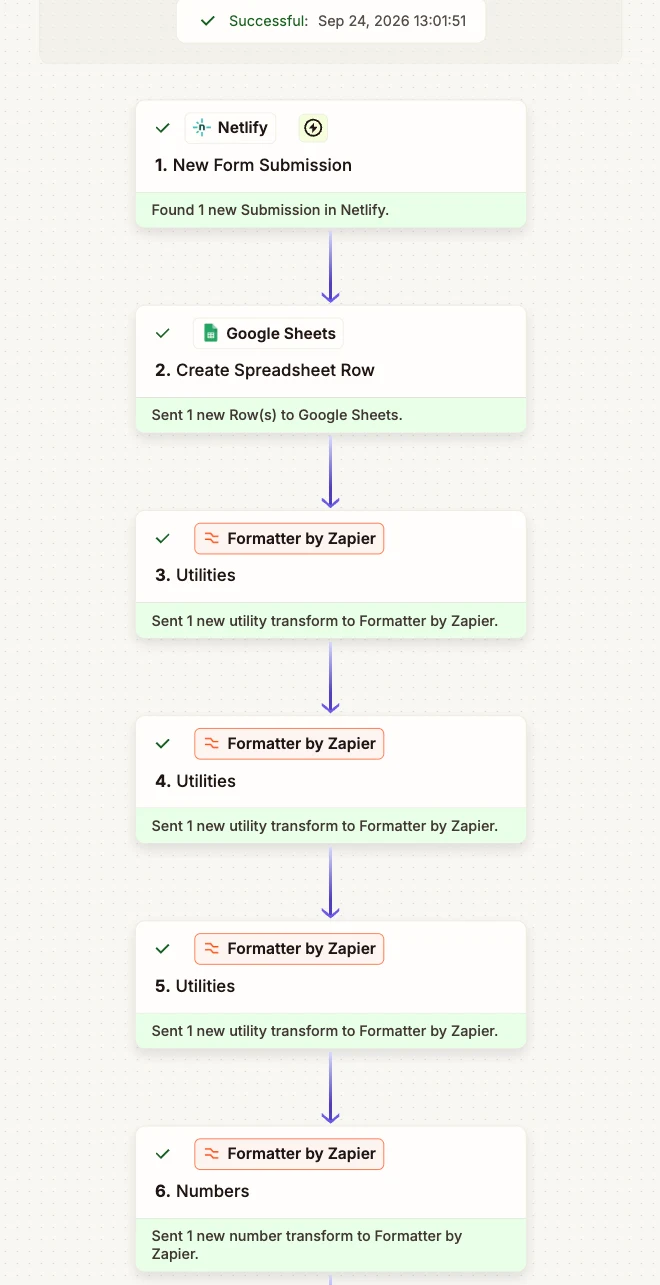
The HOT lead, followed through its Zapier run history. Every figure in its score comes from one of these steps.
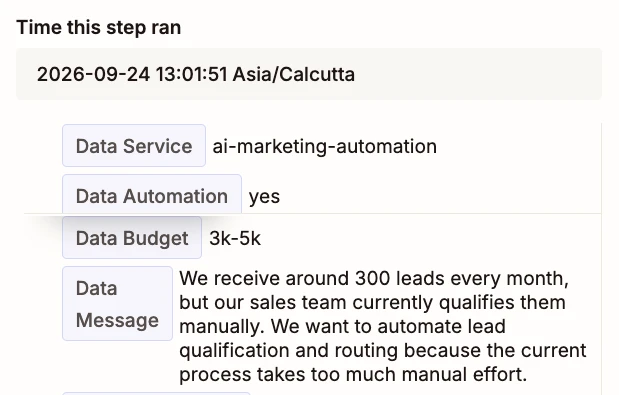
yesRaw values as Netlify passed them to Zapier.

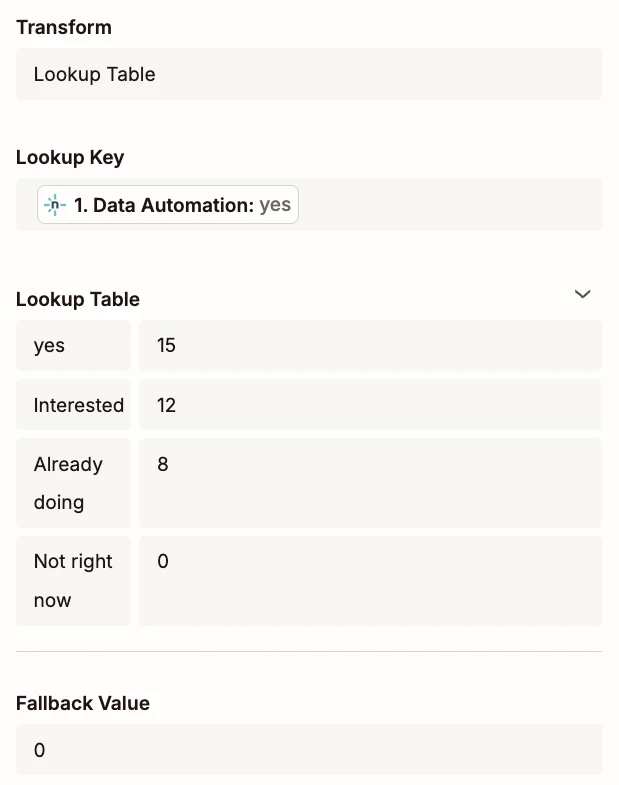
The lookup as configured for this run. Anything unmatched falls back to 0; the other three keys were corrected later (see below).

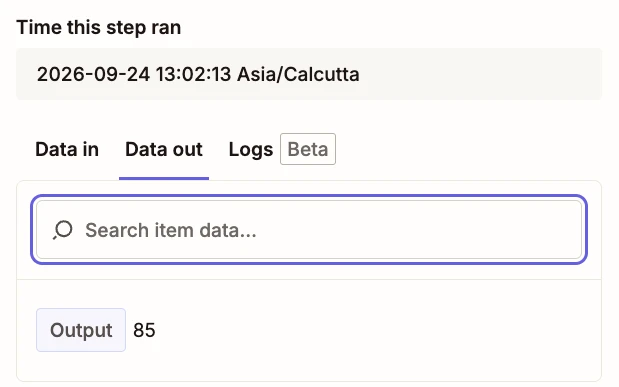
Rule scores plus the AI intent score of 25, summed.

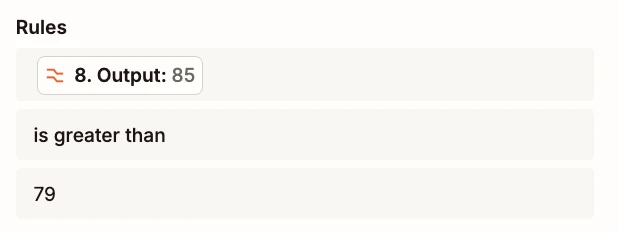
The HOT path only runs when the total is greater than 79.

Score and priority go back to the lead’s row in the database.

✓ Actual Zapier run history from the September 2026 test run. The AI step’s output is shown in the intent section above. Step 1 combines two scroll positions of the same panel.
Both bugs produced data that looked valid, so nothing flagged them. They showed up only when we checked the scores written back to the lead database: rows 2 and 3 in the sheet above.
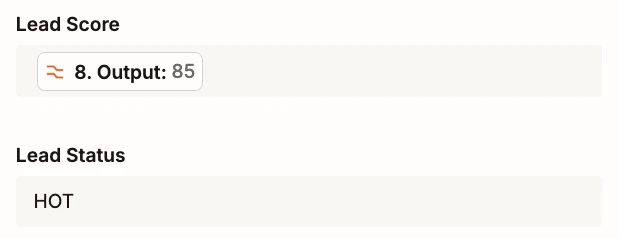
The score was calculated correctly, but the routing wrote the wrong status to the record. An 85 should never be WARM. We corrected the routing so each path writes its own priority.
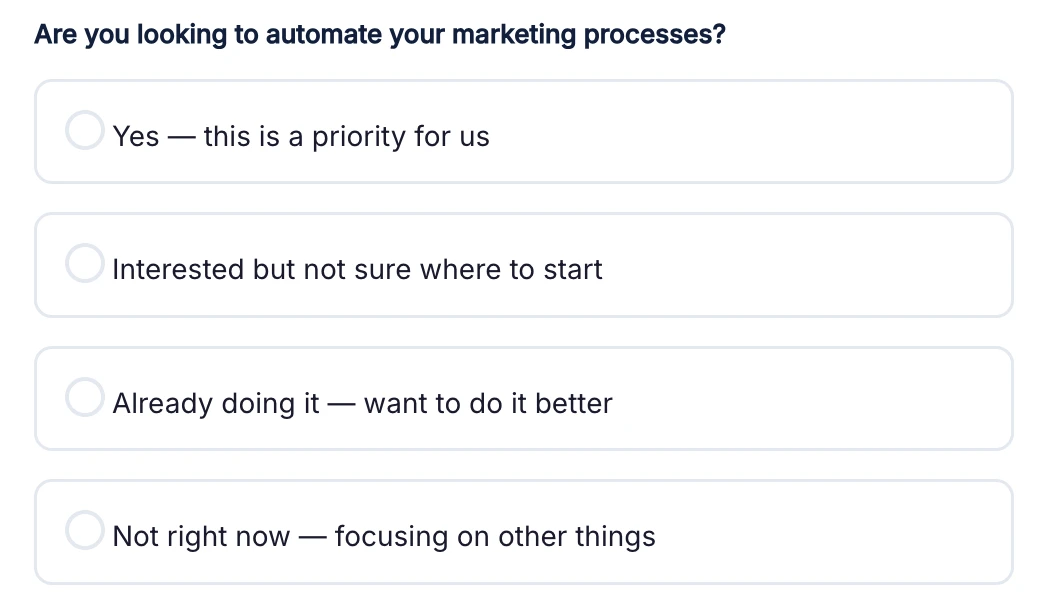
The lookup was keyed on the labels visitors read (“Interested”, “Already doing”, “Not right now”) and had no entry for yes at all. The form actually submits yes, interested, already and no. With no match, Zapier used the fallback of 0, so the lead lost 15 points and dropped a tier. We rebuilt the table on the submitted values.
The same enquiry scores 85 and routes to HOT, and the WARM and COLD tests above run on the corrected table.

| Visitor picks | Form submits | Original key | Points now |
|---|---|---|---|
| Yes — this is a priority for us | yes | missing | 15 |
| Interested but not sure where to start | interested | Interested | 10 |
| Already doing it — want to do it better | already | Already doing | 10 |
| Not right now — focusing on other things | no | Not right now | 0 |
What a visitor sees on a form is not what the automation receives. Inspect the real payload before writing a single rule, and check every test’s output, not just its run status.
This workflow has run on test enquiries, so there are no measured savings to report yet. What we can show is the size of the problem it’s built to remove. The model starts at 300 leads a month, the volume described in our HOT test enquiry. Change the numbers to match your team.
A manual review usually means reading the message, checking the company’s website or LinkedIn, judging fit and logging a status. Use your team’s fully loaded hourly cost, not just salary.
Estimates from the inputs above, not measured results from this build. The workflow takes over the triage of every lead; your team still reads and acts on the leads it ranks highest.
Every lead is scored against the same written rubric. When the same enquiry ran twice, the score moved by one point and stayed in the same tier.
In the test runs, each lead was scored within about 30 seconds of the workflow picking it up, with no one waiting to get to the inbox. Why response speed matters
The hours in the model are usually senior sales or marketing time. Every hour spent sorting enquiries is an hour not spent talking to the ones that will buy.
Accuracy means HOT leads actually close more often than COLD ones. That needs real leads and closed deals, so it’s the first thing we track once the workflow goes live.
The qualification engine is built and tested across all three outcomes. It has run on test enquiries, not yet on real lead volume. These are the steps that take it into production.
Lead scoring is the first layer. The same pattern extends to website, SEO, CRM, campaign and content signals, feeding one growth intelligence system with a person approving every consequential action.
AI lead scoring, sometimes called AI lead qualification, uses a language model to read the unstructured parts of an enquiry, such as the problem a prospect describes, and turn them into a consistent score. In this workflow, AI handles only the free-text intent assessment (35 of 100 points); service, automation interest and budget are scored by fixed rules.
Structured fields like budget or service selection have known answers, so fixed rules score them predictably and cheaply. AI is used where rules break down: interpreting what a prospect actually wrote. Keeping AI to one bounded part of the score makes results easier to audit and explain to a sales team.
Yes. The logic is a trigger, lookup-based scoring, one AI step, a sum and conditional routing. All three platforms support that pattern. Zapier suited this build because the form, spreadsheet and AI steps were available as native steps; teams with high volumes or self-hosting needs may prefer n8n.
A form with consistent field values, an agreed definition of a good lead, and a place to write results back, such as a spreadsheet or CRM. The most common failure point is data mapping: every value the form can submit needs a matching entry in the scoring rules, or it silently scores zero.
Not always. When the same test enquiry was submitted twice, the AI intent score was 18 and then 19, so the final score moved from 68 to 69 and both runs stayed WARM. Small variation is normal for language models, which is why the final decision uses fixed thresholds, and why leads scoring close to a threshold should be reviewed by a person.
No. The AI contributes an intent score within a fixed range. The final score, the HOT, WARM and COLD thresholds and the routing are all deterministic, and sales still decides what to do with each lead.
Tell us how leads reach you today. We’ll map what scoring and routing would look like for your team, in Zapier, Make or n8n, and tell you honestly if you don’t need it yet.
AI-powered workflows. Human judgement at every decision point.